Push-Pull Triodes, Feedback, and Damping
Roger Modjeski and Anthony Chipelo | Published on 2/1/2026
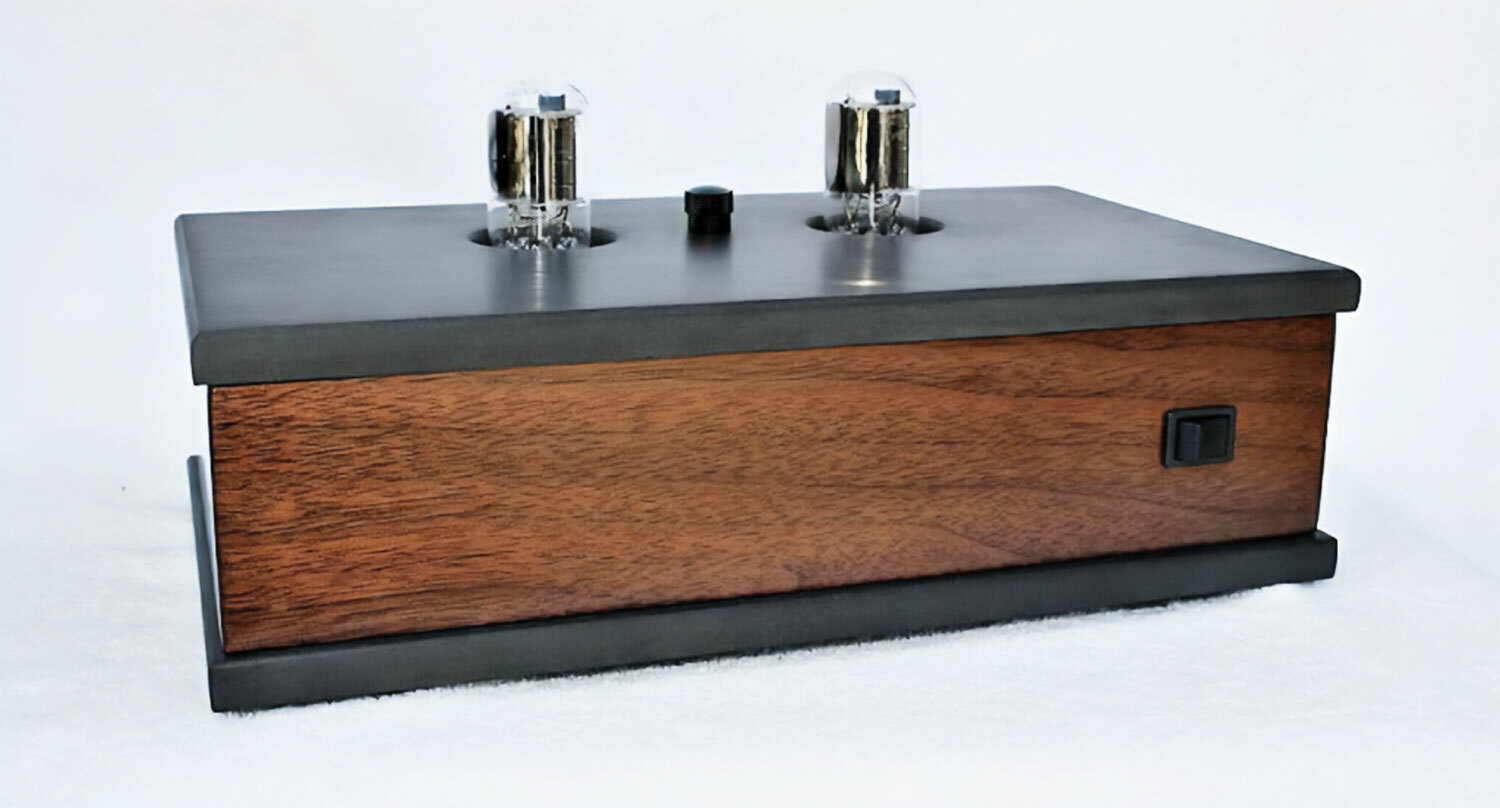 For this month’s Roger’ Corner we are going to revisit the topic of damping. Those of you that are curious enough to wonder why the answer is simple. If you read the last couple of Roger’s Corner articles about the history and design of the Music Reference RM-10 amplifier you would have read that Roger grew tired of building larger amplifiers and wanted to build a smaller one that could still deliver enough power for most listener’s needs. Well later in life Roger further experimented with even smaller amplifiers, specifically the EM-7 series that included single ended triode and push-pull versions utilizing the 13EM7 tube. It was during this time he questioned the concept of damping and began researching low resistance transformers.
There was a time long ago when manufacturers would not provide a spec for the damping factor of their amplifier. Then suddenly it became quite popular to tout the spec like it was some type of magic elixir and became a sales gimmick, especially with solid state amplifiers. Something to throw out there and hope some audiophile will bite. Sadly, many did, as if one could just hypothesize that an amplifier with a damping factor of 1000 is going to be better than one with a damping factor of 500. The fact of the matter is anything over a damping factor of 20 (0.4 ohms output impedance at 8 ohms) is basically irrelevant. However, the overall circuit design, how the feedback is applied, and most importantly if there is enough Gain Bandwidth Product to support the amount of feedback used in the circuit are what is important. This is what many audiophiles do not or choose not to understand.
For example, if an amplifier with feedback also has insufficient Gain Bandwidth Product, the distortion will rise with frequency above a certain point, often between 1KHz and 3KHz. If this happens the amplifier could be perceived as bright (or considered “louder” or more powerful) due to how our ears perceive higher ordered harmonics (5th order and above) and the Fletcher Munson curve. Tube amplifiers will not have extremely high damping factors, which typically are no greater than 20. Yet the issue, as with solid state amplifiers, is the same as feedback and damping factor are interrelated. In addition, tube amplifier manufacturers that promote zero feedback are also prone to using the term as a sales gimmick. Trust me though, an amplifier with a damping factor of 1 or 2 will have its own set of issues as well.
When an audiophile tells me they can hear the differences in amplifiers on their speakers I believe them. What I disbelieve are the silly reasons they provide for the differences they hear. Ultimately an amplifiers distortion signature impacts the sound. That distortion signature is in large part due to the use or non-use of feedback, the resulting damping factor, and how the amplifier interacts with the speaker based on those factors. Distortion produces different types and amounts of harmonics. The ear treats both the 2nd and 3rd harmonic the same way in that both contribute to “warmth” and “richness”. However, an amplifier with a predominate 3rd harmonic has considerably less overall distortion (typically 1/10th) than one based on the 2nd harmonic, and as the distortion increases, the gain band width product falls off faster. This is especially notable because the ear is so sensitive to the higher ordered harmonics.
If an amplifier has low distortion, but the distortion it has is mostly higher ordered harmonics (5th and above), such amplifiers tend to sound bright and harsh, compared to an amplifier that has a predominate 2nd or 3rd harmonic. The reason that so many Clas AB push-pull amplifiers get dinged by audiophiles for their “sound signature” compared to Class A amplifiers is that when you combine a single-ended voltage amplifier with a push-pull output, that type of circuit topology tends to produce a noticeable 5th order harmonic, which makes the amplifier less “musical”. Roger always felt that while zero feedback Class A amplifiers had their place, at some point the high amount of 2nd order harmonic would ultimately result in a high amount of intermodulation distortion (IMD) with a rise in power negating any of the initial benefits of zero feedback. Again, it ultimately comes down to how the amplifier will interact with the speaker. This is where I will let Roger take over.
Push-Pull Triodes, Feedback, and Damping
By Roger A. Modjeski
Development of the EM-7 push pull 10-watt amplifier has led me to some interesting thoughts on the topic of transformer winding resistance and its effect on damping (output impedance). Output impedance and damping factor are the same thing, just stated differently. I like to get a damping factor of 5 to 10 on my amplifiers. Many Single ended amplifiers without feedback are as low as 1 and a pentode amplifier with no feedback can be as low as 0.1. Yes, damping can get to less than one. At that point the amplifier is a current source rather than a voltage source and the output will vary directly with speaker impedance which will certainly result in a different sound, one which was likely very far from what the speaker designer had in mind. A damping factor less than 5 can cause noticeable frequency response differences on many speakers while one above 10 will play most speakers with little difference. Damping factors from 20 on up make no difference at all as the output impedance is now so small as to vanish.
In reading spec sheets from several amplifier manufacturers, I see no mention of damping factor, regulation, or output impedance. This rather important aspect seems to be ignored, perhaps because the answer is not so good. Achieving good damping without feedback, which seems to be the main selling point of these amplifiers, is no easy task. In making a survey of output transformers that DIYers are using for non-feedback amplifiers I find that rarely is any mention made of insertion loss or winding resistance. These affect the damping of the amplifier greatly. In feedback amplifiers one can reduce the output impedance very easily with feedback. In non-feedback amplifiers one finds that damping is quickly lost in the transformer with no way to recover it. Hence, I am working on some very low resistance transformers.
Read The Full Article