A Loudspeaker and Room Interaction Tuning Session with Manny LaCarrubba
Jim Hunton | Published on 5/1/2026
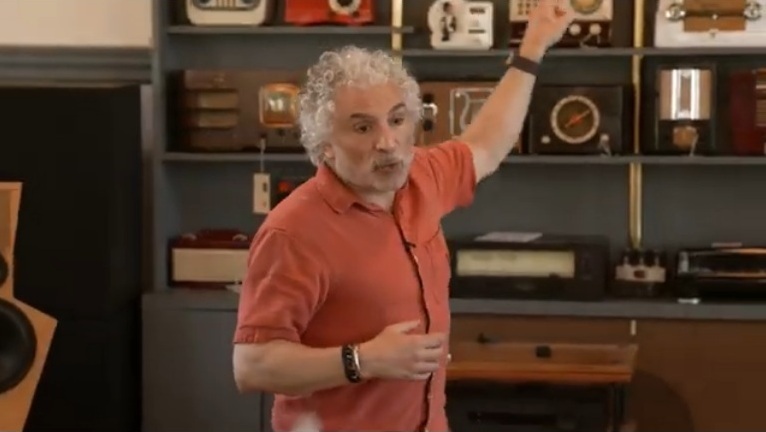
On March 29 at the California Historic Radio Museum the Audiophile Foundation held a loudspeaker and room calibration seminar hosted by Manny LaCarubba. Manny LaCarrubba is an audio engineer, loudspeaker designer, acoustician, and studio architect whose career spans high profile music production, patented loudspeaker technology, and the design of world class recording and listening environments. He is the founder and principal engineer of Sausalito Audio, a company established to commercialize advanced loudspeaker and acoustical technologies for professional studios, private cinemas, and reference listening rooms.
The seminar focused on using free software Room EQ Wizard (REW), inexpensive omni-directional microphones, and a digital equalizer from miniDSP to correct for room-loudspeaker interference issues. Manny described and demonstrated how the room impacts the frequency response of a loudspeaker. He measured the frequency response of the foundations Linkwitz LX521.4 loudspeakers and highlighted the frequency response anomalies most likely caused by the interaction with the room. These anomalies are caused by reflections, and room features such as the floor, ceiling, doorways and furniture. The measurement also highlighted the significant frequency response differences between the left and right loudspeakers caused by the room.
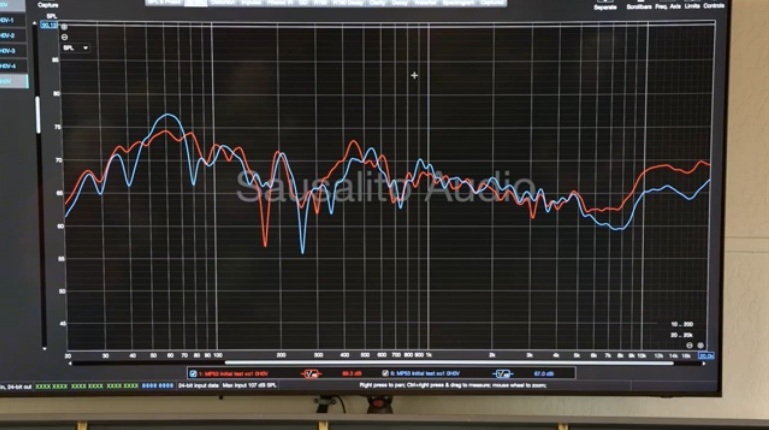
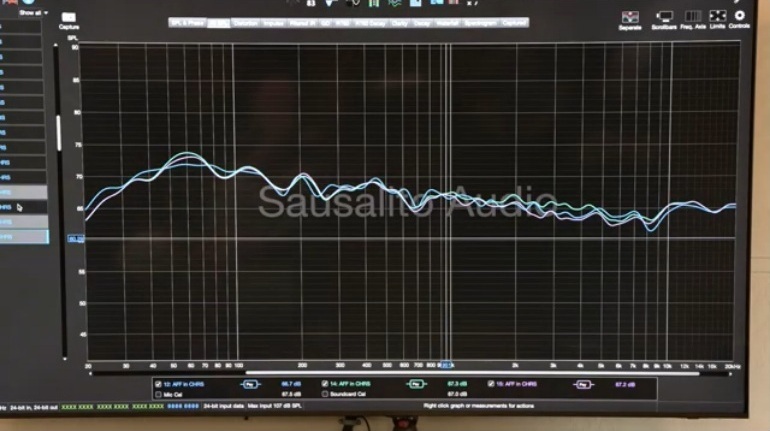
The initial frequency response measurements showed significant anomalies including tall steep low frequency humps, broad shallow midrange humps and a tweeter that was 4dB louder than desired. The frequency response measurements were used to guide the configuration of equalization filters (boost & cut) in the miniDSP Flex HTx, 8 channel electronic crossover (https://www.minidsp.com/products/ht-series/flex-htx). Small, incremental changes were made, and each speaker was remeasured after each change to ensure a positive outcome.
Then end result of the calibration process was uniformly preferred by the attendees. Well, almost uniformly. One attendee felt that the final settings had softened the midrange just a touch too much.
Attendees participated during seminar by asking many great questions that stimulated discussion beyond the limited scope of the event. It quickly became clear that most residential listening rooms with their limited acoustic treatment options would benefit from a similar calibration effort.